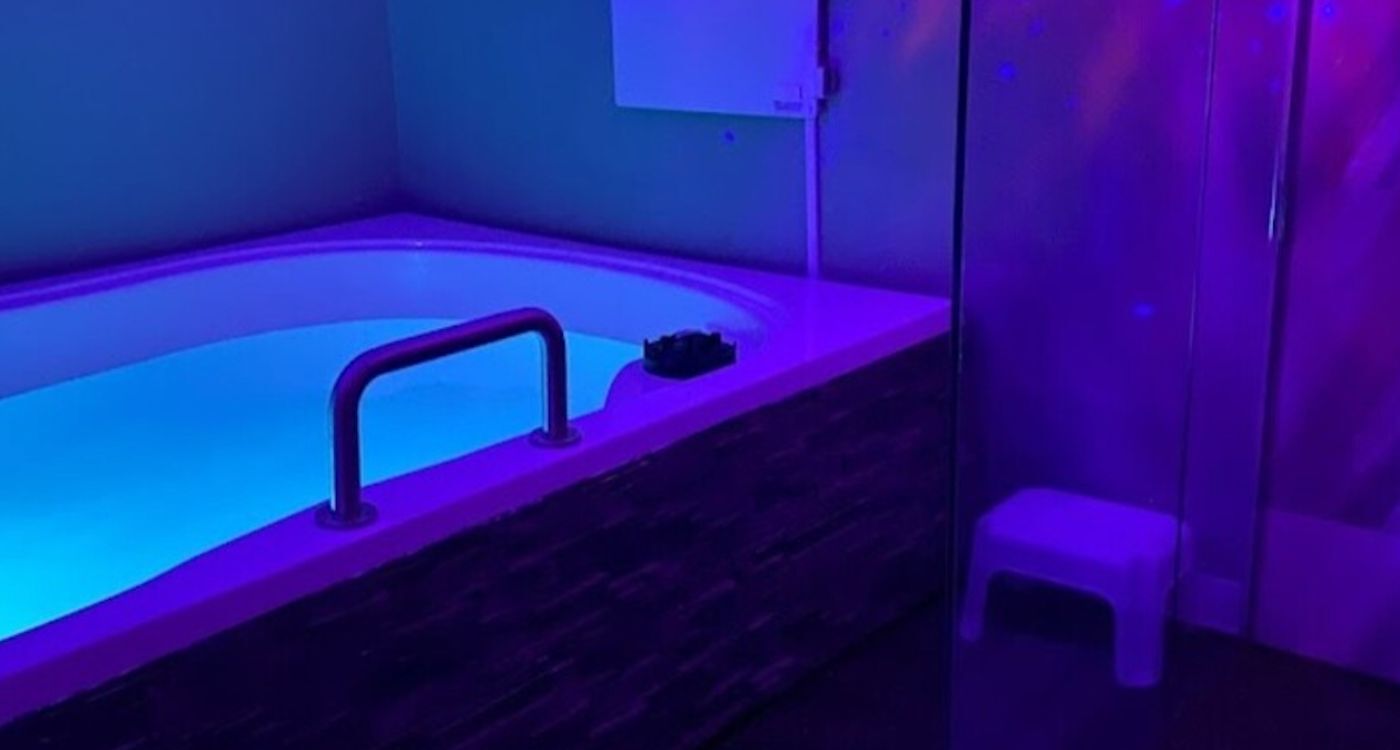
If you've heard people talk about float therapy but aren't entirely sure what it involves or whether it's worth trying, you're not alone. It tends to sound unusual at first. Lying in a dark, silent tank full of salt water isn't most people's idea of a relaxing afternoon. But for the clients who try it at Satori Therapeutics, it often becomes one of the most memorable experiences they've had for their body and mind.
Here's a plain-language look at what float therapy actually is, what you can expect at your first session, and what people most commonly notice afterward.
What Is Float Therapy?
Float therapy (also called flotation therapy or sensory deprivation) involves lying in a tank or pool filled with body-temperature water and roughly 1,000 lbs of dissolved Epsom salt. The salt makes the water so dense that your body floats effortlessly, without any effort on your part. The environment is lightproof and soundproof, removing the two biggest sources of external stimulation: sight and sound.
The result is an experience your nervous system almost never gets in ordinary life: a complete break from input. No notifications. No sounds from the street. No weight of gravity on your spine and joints. Just stillness.
At Satori Therapeutics in north-end Saskatoon, we offer two float options: a private float pod (fully enclosed) and a private open pool (open-top, more spacious). Both use the same Epsom salt solution and both offer the same sensory environment. The open pool is also available for tandem sessions, so you and a partner can float at the same time.
Sessions run 60, 90, or 120 minutes.
What to Expect at Your First Float at Satori
Before you get in
Your float facilitator will walk you through everything before your session starts: how the pod and pool work, how to adjust the light inside the pod, and what to do if you need to exit. You'll shower before entering, and earplugs are provided. There's nothing to prepare or bring.
During the session
The first 20 to 30 minutes of a float are usually the adjustment period. Your body is learning to let go of the low-level tension it carries all the time: the slight tightness in your shoulders, the constant micro-adjustments your muscles make to keep you upright. As the salt supports all of that weight, the tension tends to release on its own.
Most people reach a state of deep relaxation well before the session ends. First-timers often find that 60 or 90 minutes is a good starting point.
After the session
You'll shower, ease back into your day, and probably feel noticeably different from how you felt walking in. Most people describe a combination of physical lightness and mental quiet that lasts for several hours. Many clients book a registered massage therapy session on the same visit to extend that effect further; Mandy Fahr RMT, Hannah Redlich RMT, and Kelsey Pocha RMT all practice at Satori, so combining float and massage in one visit is straightforward.
What People Most Commonly Notice After Floating
The benefits of float therapy are something clients talk about consistently, even if the research on specific outcomes is still developing. Here's what comes up most often:
Deeper rest. Many clients describe their first float as the most rested they've felt in months, sometimes within a single session. The kind of rest that floating produces is different from sleep: it's rest without the interruption of dreams, movement, or environmental noise.
Less physical tension. The buoyancy of the salt solution takes sustained pressure off muscles and joints in a way that's genuinely difficult to replicate anywhere else. For people managing chronic neck or back tension, this can feel significant within the first session.
A quieter mind. Extended time away from screens, noise, and stimulation tends to carry over into the hours and days that follow. Many clients report that they find it easier to focus or unwind after floating, even when the session itself is days behind them.
Better sleep. A number of Satori's regular float clients notice that they sleep more deeply in the night or two following a session. When float is combined with RMT treatment the same day, this effect tends to be more pronounced.
Float Therapy and Massage: Why Clients Combine Both
One of the things that sets Satori apart from a standalone float studio is that registered massage therapy is available in the same clinic. Massage addresses physical tension in muscle and fascia directly. Float therapy gives your nervous system the quiet it needs to integrate that work. The two approaches complement each other well, and many clients who try the combination find it more effective than either treatment on its own.
How to Book Float Therapy in Saskatoon
Satori Therapeutics is located at 2712 Wentz Ave, Unit 40 in north-end Saskatoon. We're open Monday through Saturday, and all float sessions can be booked directly online.
Sessions start at $70 for 60 minutes, $100 for 90 minutes, and $130 for 120 minutes. Tandem sessions (two people floating together in the open pool) start at $90 for 60 minutes.
If you've been curious about float therapy and want to understand what it's actually like before booking, you're welcome to reach out. We're happy to answer questions.